
Department of Plant Anatomy and Cytology
Research topics
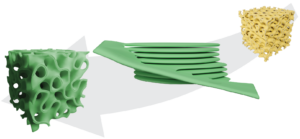
Our research focuses on a comprehensive analysis of chloroplasts and their dynamic structural and functional transformations during plant ontogenesis. Using an interdisciplinary approach that combines advanced structural, biochemical, biophysical, and molecular methods, we investigate the plasticity of the chloroplast internal membrane system organization, from formation to full functional maturity of these arrangements.
We pay particular attention to analyzing the relationships between molecular composition and spatial organization of thylakoid membranes, including highly ordered membrane structures, and their responses to stress conditions. We investigate the regulatory mechanisms governing the synthesis of key chloroplast components, plastoglobule dynamics, and protein-lipid interactions that determine the functionality of these organelles.
Our research also focuses on the complex phenomena related to the functioning of specific chloroplast components, particularly plastoglobules and the antenna complexes of the photosynthetic apparatus. We examine these components in terms of plant adaptive responses to abiotic stress and their potential bioinspired applications. We analyze the molecular and physicochemical properties of plastoglobules in response to chilling stress in plants with varying levels of temperature tolerance.
Our approach encompasses research conducted at various organizational levels, from molecular and biochemical to ultrastructural and spatial 3D analyses, carried out on diverse plant species and specially developed models. We analyze chloroplast functioning under both optimal conditions and exposure to abiotic stress. Our findings contribute to a better understanding of the specific roles that individual chloroplast components play in the overall adaptive responses of plants and the discovery of potential applications in biotechnology, as well as the development of innovative biomimetic membrane systems.
Projects
From Nature to Biomimetics: Molecular Mechanisms of Diamond-Type Cubic Membrane Formation in Photosynthetic Lineages, 2025-2029, NCN OPUS (2024/55/B/NZ3/01406), PI Łucja Kowalewska
The formation of the Prolamellar body: where biology meets geometry, 2024-2027, NCN and DFG OPUS-LAP (2022/47/I/NZ3/00498, 524578210), PI Łucja Kowalewska and Myfanwy Evans
To be, or not to be: The Puzzling Presence of PsaA Protein in Etiolated Seedlings of Angiosperms, 2024-2025, NCN PRELUDIUM (2023/49/N/NZ3/01212), PI Anna Węgrzyn, project supervisor Łucja Kowalewska
Formation of cubic membrane arrangements in chloroplasts of angiosperms, 2020-2024, NCN SONATA (2019/35/D/NZ3/03904), PI Łucja Kowalewska
European Curvature and Biology Network, 2023-2027, COST European Cooperation in Science and Technology, EU Funds (CA22153), Vice Chair Łucja Kowalewska
Diploma theses completed at the Department
Bachelor’s theses:
Regulation of plastoglobulin (FIB1A) expression by WRKY33 during chilling stress in Arabidopsis thaliana – optimization of the chromatin immunoprecipitation (ChIP) method – Nikola Rydz (2024)
Induction of plastid transformation in Arabidopsis thaliana T87 callus line – Maksym Bończak (2024)
Influence of the simulated micro- and hypergravity on cubic membrane development in plastids of angiosperms – Anna Płońska (2022)
Master’s theses:
Characterization of plastoglobule gene responses to chilling stress in chilling-sensitive Arabidopsis thaliana mutants – Anna Goławska (2025)
The Isolation and Biochemical Characteristics of Monocot and Dicot Prolamellar Body – Katarzyna Tratkiewicz (2025)
PsaA – photosystem I core protein in etioplast membranes – Krzysztof Wardak (2024)
Doctoral theses:
Formation of cubic membrane structure in Arabidopsis thaliana chloroplasts – Anna Węgrzyn (2025)
The role of the main lipoprotein chloroplastic compartments in response to abiotic stress conditions – Joanna Wójtowicz (2022)
Structural role of carotenoids in self-organization of plastid inner membranes – Michał Bykowski (2022)